
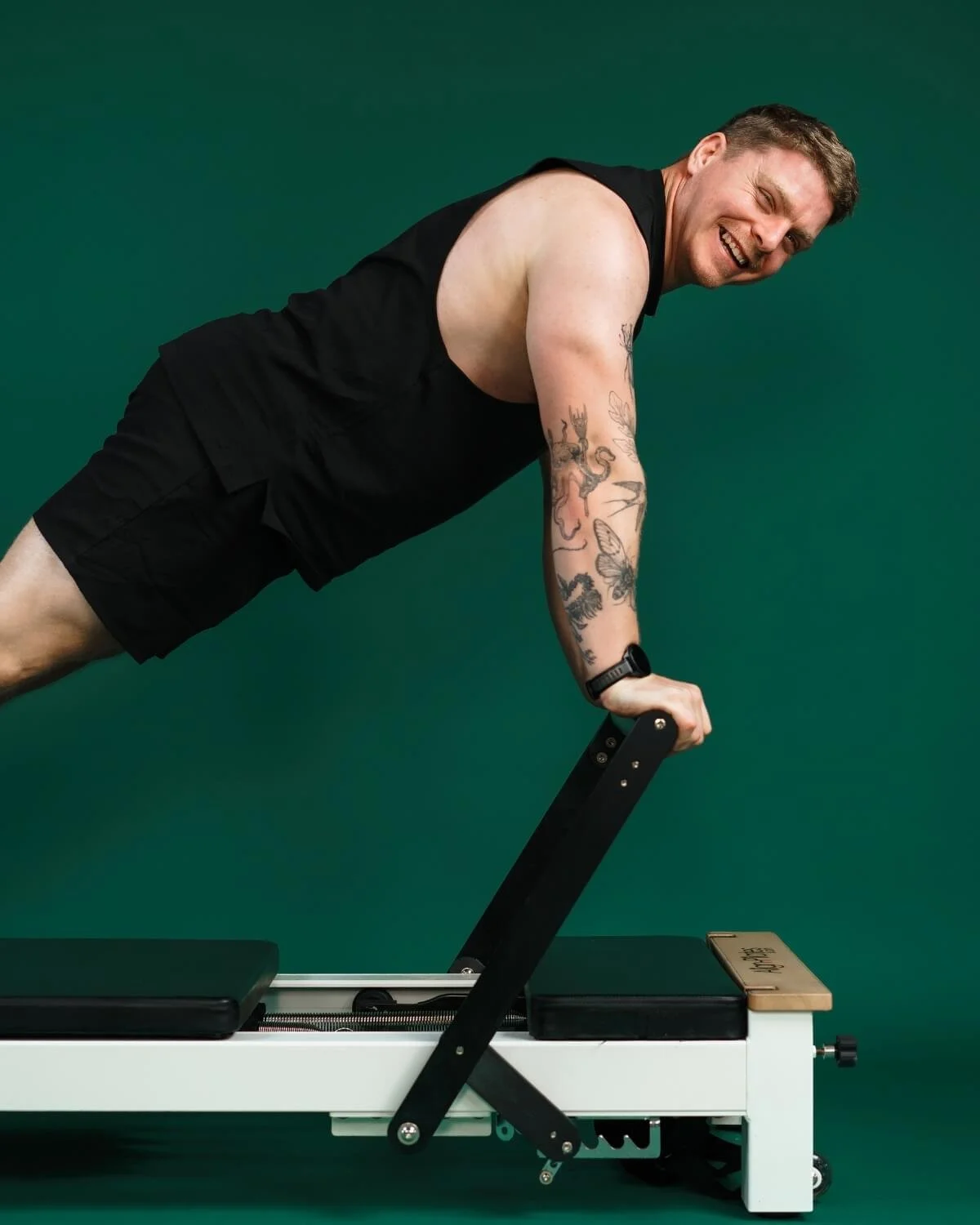
If you’ve ever looked into a Reformer Pilates class and thought, “Is this really for me?” you’re not the only one. Pilates has long been stereotyped as a women’s workout. But strength, mobility and body control are useful to everyone, and more men are discovering what deliberate, well-coached movement can add to their training.
In 2026, the conversation is shifting. Life Time, a large US fitness provider, reported that the number of men taking part in its Pilates sessions had more than doubled over five years. That doesn’t tell us how many men are signing up, but it does reflect a wider change: Pilates is finding a place alongside lifting, running, cycling and team sport.
At M.O Pilates, our Clifton and Harbourside studios welcome all levels. You don’t need Pilates experience, exceptional flexibility or a particular body type to start. You just need to be curious.
So, is Pilates for men?
Yes! Pilates is for people who want to move with more control, build strength and work on mobility. The exercises don’t change according to your gender; your instructor can adjust the challenge to suit your body, experience and goals.
The idea that Pilates is “easy” can also miss the point. Reformer work can feel surprisingly demanding because you’re asked to control the movement, not simply generate force. The carriage moves; the springs provide resistance; and your body has to coordinate the two.
Translation? You might find that a slow, precise exercise challenges you in a different way from a set of lifts or fast paced cardio training.
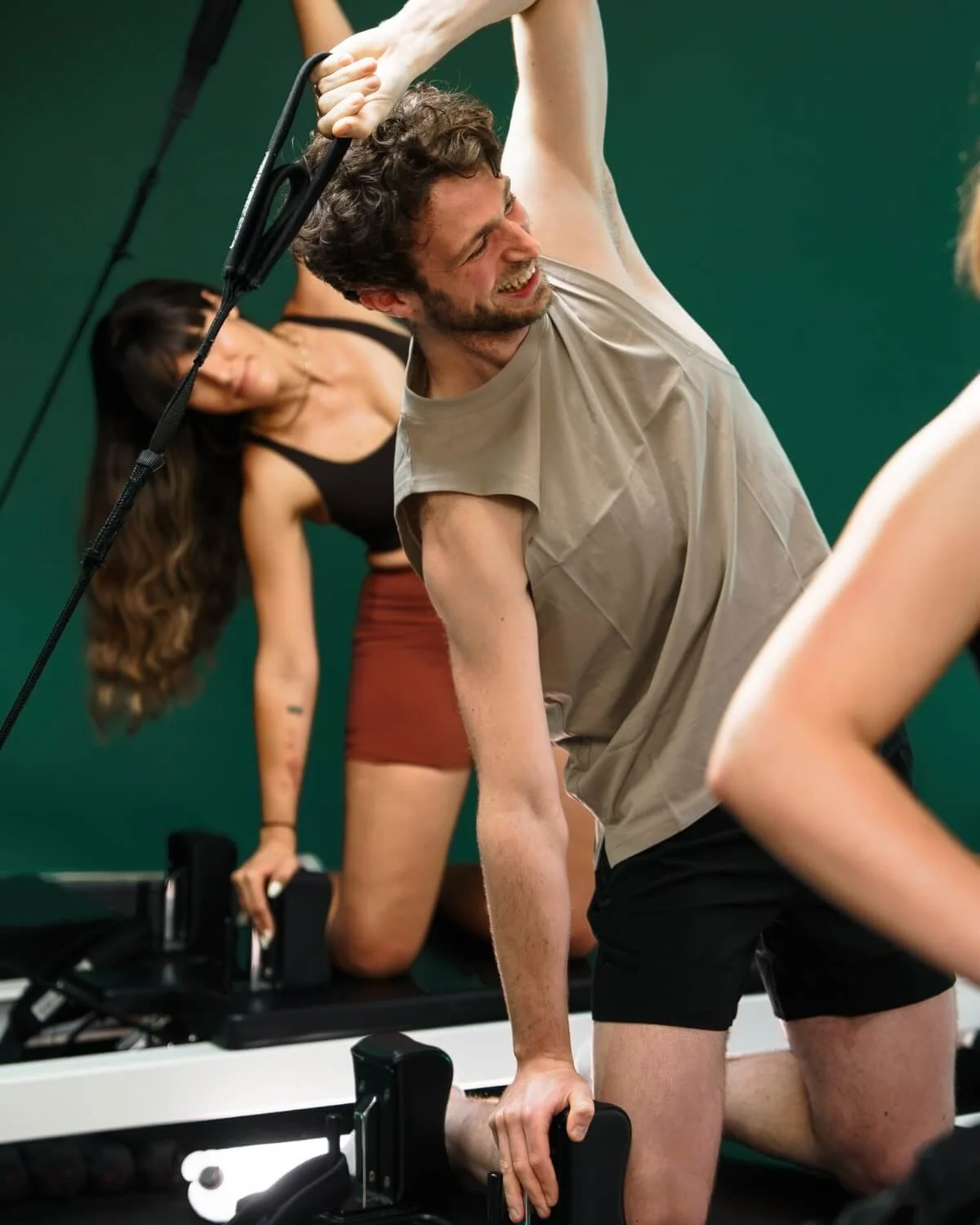
What can Reformer Pilates add to your training?
Reformer Pilates isn’t a replacement for every kind of exercise. It can, however, be a useful part of a balanced routine, especially if you’d like to practise moving well under controlled resistance.
1. Core strength that supports movement & sport
Pilates asks your trunk to help steady your pelvis and spine while your arms or legs move. That calls on coordination between your deep abdominal and back muscles, rather than asking you to focus only on isolated ab exercises. This additional core strength then helps prevent or improve back pain alongside improving movement in general.
A small 2025 randomised study of male amateur footballers examined mat and Reformer Pilates alongside physical and technical performance tests. It found improvements in both physical and technical skills in the group that added Pilates. Read the study.
Translation? Useful for everyday movement and a worthwhile complement to sport-specific training.
2. Mobility with control
Mobility isn’t simply how far you can stretch. It’s also how comfortably and steadily you can move through a range of motion. Reformer exercises let you work through controlled positions with adjustable support and resistance.
Translation? The aim isn’t to force a deeper stretch. It’s to build comfort and control as you move. This means better movement in everything else you do.
3. Balance and coordination
Some exercises challenge you to control both sides of your body, or to keep your balance while the carriage moves. Your nervous system is continually coordinating muscles and adjusting to what’s happening beneath you. A process called neuromuscular coordination. You get to practise steadiness and body awareness, not just effort.
A useful complement, not a magic shortcut
If your main goal is to lift heavier weights, Reformer Pilates isn’t a substitute for progressive strength training. And no single class can promise to prevent injury or guarantee a performance breakthrough.
Its value is in offering a different training stimulus: controlled resistance, deliberate movement and focused attention to how your body works. For many people, that’s a helpful counterpoint to doing the same exercises week after week.
The M.O Method’s 3-phase Reformer training is designed to build core strength, definition and total-body fitness. With expert instruction and options to adapt the movements, you can learn the foundations and progress at a pace that feels right for you.
What to expect at your first class
If you’re new to Reformer Pilates, start with CoreForm. It’s a good place to get familiar with the equipment, the movement and the Pilates principles behind the exercises.
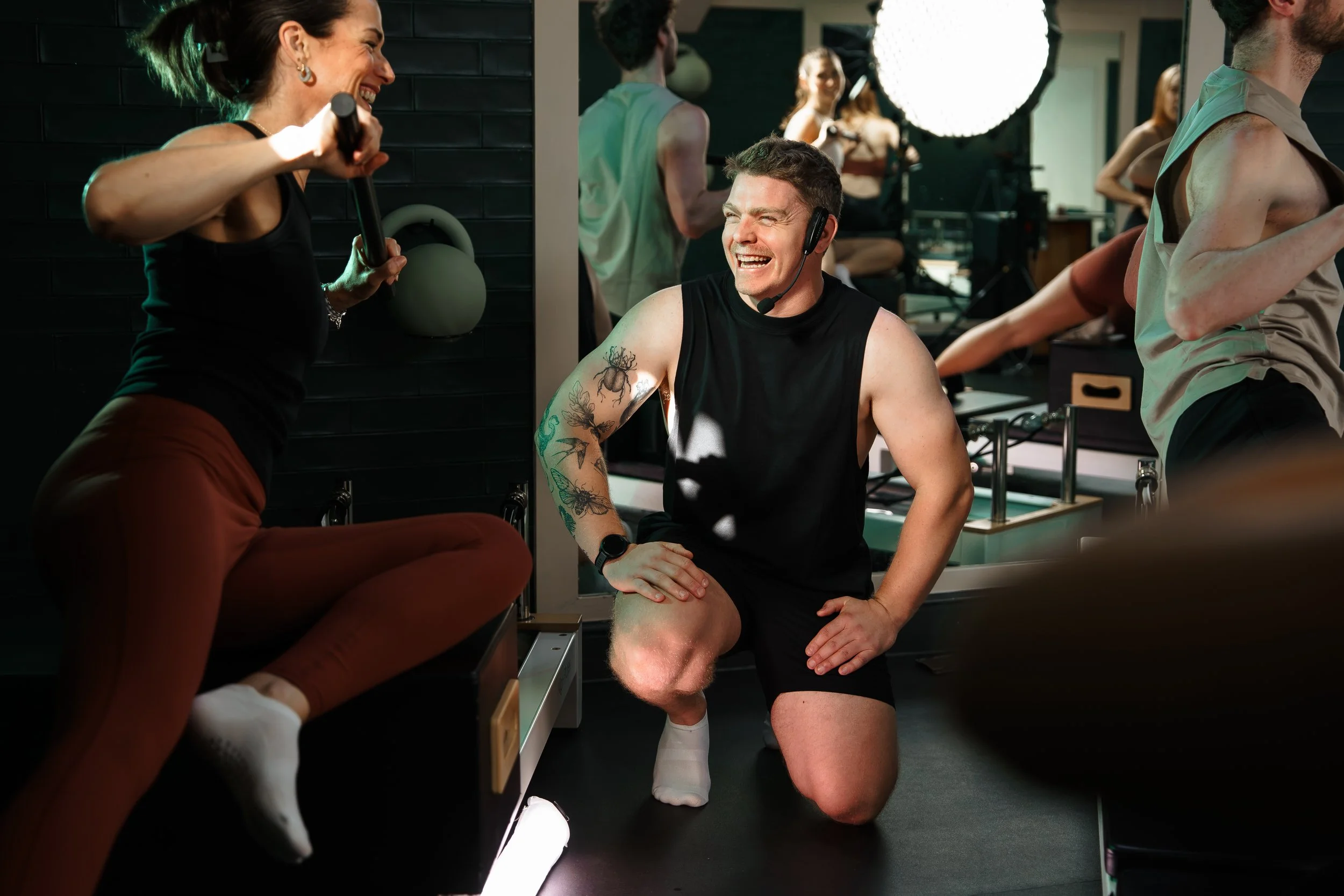
Your instructor will guide you through the set-up and offer cues as you go. Expect to try a range of positions and movements, and to focus on control as well as effort. Some exercises may feel unfamiliar at first; that’s normal.
You don’t need to match anyone else in the room. Take it at your own pace: there’s no pressure to power through a movement that doesn’t feel right. Ask your instructor for a modification or a little more guidance whenever you need it.
Many people notice something straight away: a clearer sense of how they’re moving, a new challenge, or that post-class feeling of having worked muscles you don’t usually feel. Visible results from the first session can mean noticing that immediate difference; lasting strength and fitness develop with regular, appropriate training.
Perfect for…
Reformer Pilates could be a good fit if you’re:
A runner, cyclist or gym-goer looking to add variety to your training.
Interested in Pilates for core strength or back pain and controlled full-body movement.
Keen to work on mobility without making every session a high-impact workout.
New to Pilates and looking for reformer pilates for beginners with clear, expert guidance.
Curious about a workout that challenges you to slow down and pay attention.
And if you’re still unsure, that’s fine. You can try a class before deciding whether it belongs in your routine.
Frequently asked questions
Do I need to be flexible or fit before I start?
No. Beginners are welcome, and your instructor can offer options to suit your experience. You don’t need to arrive with Pilates skills already mastered.
What should I wear?
Wear comfortable gym or yoga clothes that let you move easily. For Reformer classes, grip socks are required for safety and hygiene; bring your own or check with the studio about buying a pair.
How early should I arrive?
Arrive at least 10 minutes before class so your instructor can welcome you and go through the induction. If it’s your first class, being on time gives you space to settle in without rushing.
Where can I book Reformer Pilates in Bristol?
M.O Pilates has studios in Clifton and Harbourside, both offering Reformer classes. See the Clifton class schedule or Harbourside class schedule. For directions and studio information, visit our contact page.
For parking, the studio information lists Clifton Down Shopping Centre and nearby metered roads for Clifton, and Wapping Wharf or Asda car parks and nearby metered roads for Harbourside. Check local signs and availability when you visit.
Curious? Start with three classes
If you’re looking for reformer pilates bristol classes that are welcoming, expertly guided and designed to challenge you at your own level, come and give the M.O Method a try.
New clients can get 3 classes for £52. It’s a low-pressure way to experience the equipment, meet the instructors and discover what feels right for your training.
Explore the new client offer, then book your classes at Clifton or Harbourside. You’re welcome here.